
Algonquin to Adirondacks Collaborative

Blog

  • Home
    • What Is A2A?
    • Recent News
  • About
    • Connectivity
    • Alice the Moose
    • Board & Staff
    • FAQs
  • Landscape
    • Wildlife
    • Protected Areas
  • Our Work
    • A2A Trail >
      • The A2A Trail Guide
      • A2A Trek 2023
    • Mapping
    • Road Ecology >
      • Highway 401
      • Road Mitigation Project in UCLG
    • Science Symposium
  • Get Involved
    • Become a Trail Champion
    • Join A2A
    • Volunteer
    • Contact Us
  • Donate
    • Legacy Giving
  • Resources
    • Publications
    • For Landowners
    • Annual Reports
    • Media
  • Partners
  • SIGN UP
  • Shop

8/17/2023

"the pilgrimage for nature trail": connecting people and wildlife to nature

0 Comments

Read Now
 
The Pilgrimage for Nature Trail is symbolic of the regions need for ecological connectivity
By: Aleisha Pannozzo
Picture
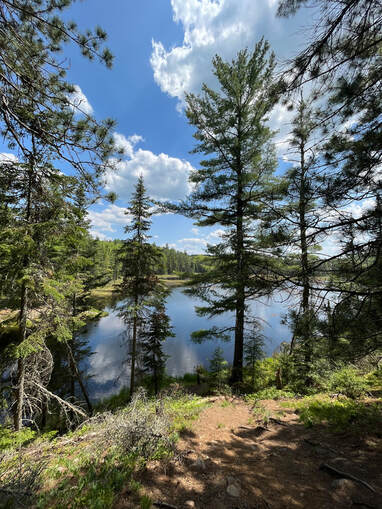
View of Amikeus Lake from the Beaver Pond Trail in Algonquin Park, Ontario.
As an avid hiker and nature enthusiast, I have always appreciated how my body and mind feel after a good hike on a beautiful trail. There is something about the sound of leaves and twigs crunching below my feet, the symphony of chirping birds, and the gentle breeze between the trees. My favourite trails are those that wrap around a serene lake or trace the unhurried pace of a tranquil stream. The sound of gentle water has this uncanny ability to drown out your thoughts and immerse you in the present moment. There is no worrying about the future, yesterday's mistakes, or tomorrow's uncertainty. There is only Now.

Nature has this amazing power to inspire, rejuvenate, and provide you with solace. Trails are the bridges that connect our souls to the natural world. They also act as tangible pathways that grant us entry into the heart of the wilderness.
​ 

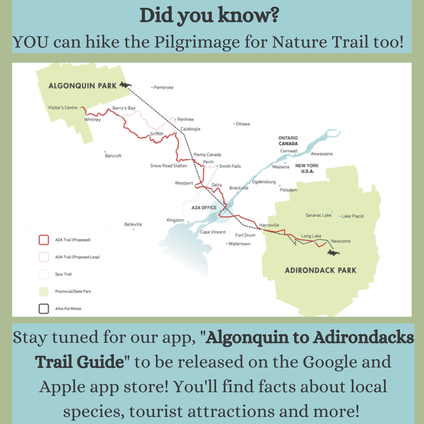
This connection to nature's soothing embrace brings to mind A2A’s Pilgrimage for Nature trail, which our partner Jamie Findlay is currently trekking through. This 640-km trail winds its way through different forest communities, from the northern hardwood forests in the Adirondacks to the southern deciduous forests in Algonquin Park.
Picture
The very essence of this trail encapsulates the transformative experience of being in nature. Just as the sound of water draws us into the moment, the Pilgrimage for Nature Trail beckons us to step away from our daily lives and immerse ourselves in the beauty of the outdoors.

But this trail represents more than just a physical journey. It is symbolic of something much bigger. It reminds us of the important role of connectivity in our environment and the role that humans play in providing it. 

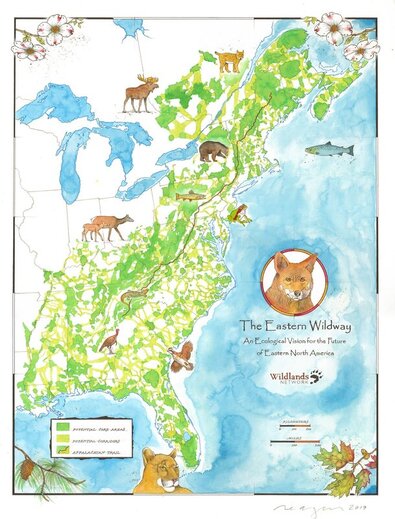
It is symbolic of the critical link that this unique ecological region provides for wildlife migration in the great Eastern Wildway, which extends from the wilderness of Ontario and Quebec, down to the Adirondacks, through the Appalachians and into the Everglades. It is one thing to have core protected areas, but how does that serve our wildlife in the grand scale of things? Wildlife needs to be able to migrate between these areas; without linkages, they are isolated, risking a decline in genetic diversity and ultimately, species extinction. ​
Picture
Map of the Eastern Wildway, a bold vision from Wildlands Network that aims to create a connected corridor for wildlife to thrive.
Ecological corridors, like the one represented by this trail, are essential for maintaining biodiversity and supporting the movement of wildlife. They allow animals to follow their natural migration patterns, forage for food, and find suitable habitats, all of which are crucial for their survival. These corridors serve as lifelines, enabling animals to navigate through fragmented landscapes and adapt to changing conditions brought about by climate change. 

The Pilgrimage for Nature Trail serves as a living example of how human efforts to create connectivity can mirror the natural world's complex web of interactions. Just as we yearn for the solace and tranquillity that the trail provides, wildlife requires similar pathways to thrive. It becomes a microcosm of the broader conservation goals that we must prioritize for the health of our planet and its wild inhabitants.

So, as you venture along the Pilgrimage for Nature Trail or explore other trails that captivate your spirit, remember the greater message they convey. They are not just paths for us to tread; they are pathways to understanding, appreciating, and safeguarding the necessary connections that sustain life on our planet. 
​

Share

0 Comments


Leave a Reply.

Details

    AuthoRS

    Aleisha Pannozzo
    ​
    Communications Lead
    ​
    Erin Postma
    Conservation Programs Coordinator 

    Archives

    March 2024
    December 2023
    November 2023
    October 2023
    September 2023
    August 2023
    July 2023

© 2025 Algonquin to Adirondacks Collaborative
A2A is a 149(1)(f) registered Canadian charity | BN: 86307 1668 RR0001 | and a 501(c)(3) tax-exempt organization in the U.S. | IRS #86-1358996 |
Become a Member | Maps & Region |  FAQs | Donate Online | Contact Us | Privacy Policy
  • Home
    • What Is A2A?
    • Recent News
  • About
    • Connectivity
    • Alice the Moose
    • Board & Staff
    • FAQs
  • Landscape
    • Wildlife
    • Protected Areas
  • Our Work
    • A2A Trail >
      • The A2A Trail Guide
      • A2A Trek 2023
    • Mapping
    • Road Ecology >
      • Highway 401
      • Road Mitigation Project in UCLG
    • Science Symposium
  • Get Involved
    • Become a Trail Champion
    • Join A2A
    • Volunteer
    • Contact Us
  • Donate
    • Legacy Giving
  • Resources
    • Publications
    • For Landowners
    • Annual Reports
    • Media
  • Partners
  • SIGN UP
  • Shop